

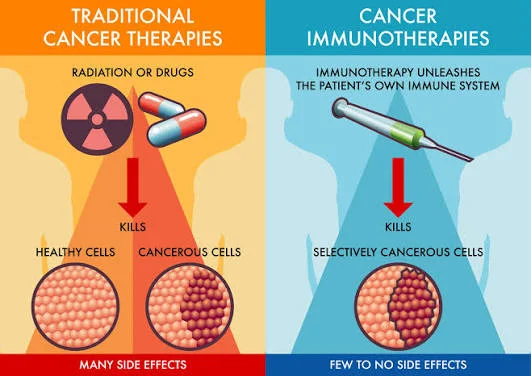
The immune system is one of the body’s most important defences against disease. It identifies and attacks harmful organisms and abnormal cells. Immunotherapy uses this natural defence system to help recognise, target, and destroy cancer cells. It has become an important treatment approach for several blood cancers, particularly in patients whose disease has returned or has not responded adequately to earlier treatments.
Unlike traditional chemotherapy, which directly attacks rapidly dividing cells, many immunotherapies work by helping the immune system identify cancer cells more effectively or by using specially modified immune cells to attack them. In this guide, we’ll explain how immunotherapy works, the main types used for blood cancers, CAR T-cell therapy, potential side effects, and its role in the treatment of leukaemia and lymphoma.
What Is Immunotherapy?
Immunotherapy is a type of cancer treatment that helps the immune system fight cancer. Cancer cells can sometimes avoid detection by weakening immune responses or using signals that prevent immune cells from attacking them.
Different immunotherapies work in different ways. Some remove the signals that suppress immune activity, while others attach to cancer cells and help immune cells identify them. Some treatments use a patient’s own immune cells, which are modified or expanded in a laboratory before being returned to the body.
The most appropriate treatment depends on the type of cancer, the characteristics of the cancer cells, previous treatments, and the patient’s overall health.
How Does Immunotherapy Work Against Blood Cancers?
Blood cancers develop in cells of the blood, bone marrow, or lymphatic system. Many of these abnormal cells carry specific proteins or markers on their surfaces.
Doctors can use these markers to help identify cancer cells and determine whether a particular immune-based treatment may be appropriate.
Immunotherapy may work by:
- Helping immune cells recognise cancer cells
- Blocking signals that prevent immune responses
- Attaching antibodies to cancer cells
- Activating T cells
- Genetically modifying immune cells
- Supporting the immune system after other cancer treatments
This targeted approach can be particularly useful in blood cancers because abnormal cells often carry identifiable markers that can be targeted by certain medicines or cellular therapies.
Main Types of Immunotherapy for Blood Cancers
Several types of immune-based treatments are used or studied for blood cancers.
1. Monoclonal Antibodies
Monoclonal antibodies are laboratory-produced proteins designed to bind to specific targets on cancer cells.
Once attached, they may:
- Mark cancer cells for destruction
- Block signals needed for cancer-cell growth
- Deliver treatment directly to abnormal cells
- Activate other parts of the immune system
Some antibody treatments are used alone, while others are combined with chemotherapy or other medicines.
2. Immune Checkpoint Inhibitors
The immune system has natural checkpoints that help prevent excessive immune activity. Some cancer cells can use these checkpoints to avoid being attacked.
Checkpoint inhibitors block certain immune-suppressing signals, allowing T cells to remain active against cancer cells. These medicines have an important role in several cancers and are also used in selected blood cancer settings depending on the diagnosis and treatment plan.
3. Bispecific Antibodies
Bispecific antibodies are designed to connect two different targets. One part may attach to a cancer cell, while another connects to a T cell.
This brings the immune cell closer to the cancer cell and can help trigger an immune attack.
These therapies are being used in selected blood cancers, including certain types of leukaemia, lymphoma, and multiple myeloma.
4. CAR T-Cell Therapy
CAR T Cell Therapy is one of the most advanced forms of personalised immunotherapy.
In this treatment, T cells are collected from the patient’s blood and genetically modified in a laboratory. A special receptor called a chimeric antigen receptor is added to the cells. This receptor helps the T cells recognise specific proteins on cancer cells.
The modified cells are then multiplied and infused back into the patient. Once inside the body, the CAR T cells can identify and attack cancer cells carrying the target antigen.
What Is the CAR T-Cell Therapy Process?
The treatment generally involves several stages.
T-Cell Collection
The patient’s blood is collected through a process called apheresis. T cells are separated from the rest of the blood before the remaining components are returned to the patient.
Genetic Modification
The T cells are modified in a specialised laboratory so they can produce the CAR receptor.
Cell Expansion
The modified cells are grown in large numbers. This process may take time because a sufficient number of cells must be prepared for treatment.
Conditioning Treatment
The patient may receive chemotherapy before the modified cells are infused. This helps prepare the immune system for the treatment.
CAR T-Cell Infusion
The modified cells are returned to the patient through an intravenous infusion.
Monitoring
Patients require close monitoring after treatment because some immune-related side effects can be serious and require immediate medical attention.
CAR T-cell therapies have been approved for several blood cancers, including certain types of acute lymphoblastic leukaemia, lymphomas, chronic lymphocytic leukaemia, and multiple myeloma.
Immunotherapy in Leukaemia Treatment
Leukaemia Treatment depends on the specific type of leukaemia and may involve chemotherapy, targeted medicines, stem cell transplantation, radiation in selected cases, and immunotherapy.
Immune-based treatments may be particularly important for some patients with relapsed or treatment-resistant disease.
For example, certain CAR T-cell therapies target proteins found on B cells and can be used in selected patients with B-cell acute lymphoblastic leukaemia. Other immune-based treatments are being investigated for additional types of leukaemia.
The treatment decision depends on factors such as:
- Type of leukaemia
- Genetic characteristics of the cancer
- Patient’s age
- Previous treatment
- Whether the disease has relapsed
- Overall health
- Availability of a suitable treatment
CAR T-cell therapy has significantly expanded treatment options for some patients with relapsed blood cancers. However, it is not suitable for every patient or every type of leukaemia.
Immunotherapy in Lymphoma Treatment
Lymphoma Treatment may include chemotherapy, radiation therapy, targeted medicines, immunotherapy, stem cell transplantation, or combinations of these approaches.
Antibody-based treatments can target proteins found on lymphoma cells. CAR T-cell therapy may also be considered for certain patients with specific types of lymphoma, particularly when the disease has returned or has not responded to previous therapies.
The use of immune-based treatments has changed the treatment landscape for several advanced lymphomas. Research has shown that CAR T-cell therapy can produce significant responses in some patients with difficult-to-treat disease.
Benefits of Immunotherapy
Immune-based treatment may offer several potential benefits.
These include:
- More targeted treatment
- Long-lasting immune responses in some patients
- Potential effectiveness after other treatments have failed
- Personalised treatment approaches
- The ability to target specific cancer markers
Some immune therapies can also create immune memory, allowing the immune system to recognise cancer-related targets after treatment. However, the response varies significantly between patients.
Possible Side Effects
Although immunotherapy can be highly effective, it may cause side effects because it activates or modifies the immune system.
Potential side effects include:
- Fever
- Fatigue
- Chills
- Nausea
- Low blood pressure
- Allergic or infusion reactions
- Inflammation affecting organs
- Low blood-cell counts
CAR T-cell therapy has specific risks that require careful monitoring.
Cytokine Release Syndrome
Cytokine release syndrome can occur when activated immune cells release large amounts of inflammatory substances into the bloodstream.
Symptoms may include:
- Fever
- Chills
- Low blood pressure
- Fast heartbeat
- Breathing difficulties
The severity can vary, and patients are monitored closely after treatment.
Neurological Side Effects
Some patients receiving CAR T-cell therapy may experience neurological symptoms such as confusion, difficulty speaking, tremors, or seizures. Healthcare teams monitor for these complications and provide treatment when necessary.
How Is Immunotherapy Different from Chemotherapy?
Chemotherapy generally uses medicines that directly destroy rapidly dividing cancer cells. However, it can also affect some healthy cells that divide quickly.
Immunotherapy works primarily by activating, redirecting, or strengthening the immune system’s ability to recognise and attack cancer cells.
Some patients receive both approaches. Chemotherapy may reduce the number of cancer cells, while immunotherapy may help the immune system target remaining abnormal cells.
The best approach depends on the patient’s specific diagnosis and treatment plan.
Who May Be Eligible for Immunotherapy?
Not every patient with blood cancer is eligible for every immunotherapy.
Doctors may consider:
- Cancer type and subtype
- Specific markers on cancer cells
- Previous treatment
- Disease response
- General health
- Organ function
- Previous stem cell transplantation
- Potential treatment risks
Specialised testing may be required before a treatment is recommended. In the case of CAR T-cell therapy, doctors may need to confirm that the cancer cells carry the specific target that the CAR T cells are designed to recognise.
The Future of Immunotherapy for Blood Cancers
Research into immune-based cancer treatment continues to expand. Scientists are studying ways to make therapies more effective, reduce side effects, and develop treatments for cancers that currently respond poorly to existing approaches.
Researchers are also investigating next-generation CAR T-cell therapies, new bispecific antibodies, combination treatments, and methods that may allow immune cells to target a wider range of blood cancers.
Although some newer approaches remain experimental, advances in cellular and immune-based therapies continue to change the way certain blood cancers are treated.
When Should You Speak to a Haematologist?
A haematologist or oncology specialist can help determine whether immune-based treatment may be appropriate.
Patients should seek specialist advice when they have:
- A newly diagnosed blood cancer
- Disease that has returned after treatment
- Cancer that has not responded to standard treatment
- A need for personalised treatment options
- Questions about clinical trials
- A potential need for cellular therapy
Early consultation with a specialist team can help patients understand available treatments and whether advanced therapies may be appropriate for their individual condition.
Final Thoughts
Immunotherapy has become an important part of modern blood cancer care. By helping the immune system recognise and attack abnormal cells, these treatments offer new options for selected patients with leukaemia, lymphoma, multiple myeloma, and other blood cancers.
In Pakistan, specialised centres such as the National Institute of Blood Disease & Bone Marrow Transplantation (NIBD) contribute to the diagnosis and management of complex blood disorders and haematological malignancies. Patients should consult a qualified haematology or oncology team to understand whether immunotherapy or another treatment approach is appropriate for their condition.
FAQs
What is immunotherapy for blood cancer?
It is a type of treatment that uses or strengthens the immune system to recognise and attack cancer cells. Different approaches include monoclonal antibodies, checkpoint inhibitors, bispecific antibodies, and CAR T-cell therapy.
What is CAR T-cell therapy?
CAR T-cell therapy uses a patient’s own T cells. These cells are modified in a laboratory to recognise specific targets on cancer cells before being multiplied and infused back into the patient.
Is immunotherapy used for leukaemia?
Yes. Certain immune-based treatments are used for selected types of leukaemia, particularly in some patients with relapsed or treatment-resistant disease. The specific treatment depends on the type and characteristics of the leukaemia.
Can immunotherapy be used for lymphoma?
Yes. Several immunotherapy approaches are used in selected lymphoma cases. These may include antibody-based treatments, bispecific antibodies, and CAR T-cell therapy.
What are the serious side effects of CAR T-cell therapy?
Important side effects can include cytokine release syndrome and neurological complications. Patients receiving this treatment require close monitoring by a specialised medical team.


