

Cancer is a broad group of diseases in which abnormal cells grow uncontrollably and may invade surrounding tissues or spread to other parts of the body. Blood Cancer is different from many cancers because it usually begins in the blood-forming tissues, bone marrow, or lymphatic system rather than developing as a solid tumour in a specific organ.
Understanding the difference between blood cancers and other cancers can help patients recognise symptoms, understand diagnostic tests, and learn why treatment approaches may vary. While both types involve abnormal cell growth, they differ in where they begin, how they spread, how they are diagnosed, and how doctors assess their progression.
In this guide, we’ll explain the main differences between blood cancers and solid tumours, common types, symptoms, diagnosis, staging, and treatment options.
What Is Blood Cancer?
Blood cancer refers to a group of cancers that affect blood-forming tissues, blood cells, bone marrow, or the lymphatic system. The major categories include leukaemia, lymphoma, and multiple myeloma. Some other bone marrow disorders may also be classified within the broader group of haematological malignancies.
These cancers can affect the production and function of healthy blood cells. As a result, patients may develop problems related to oxygen transport, immunity, infection protection, blood clotting, or bone health.
Major Types of Blood Cancer
1. Leukaemia
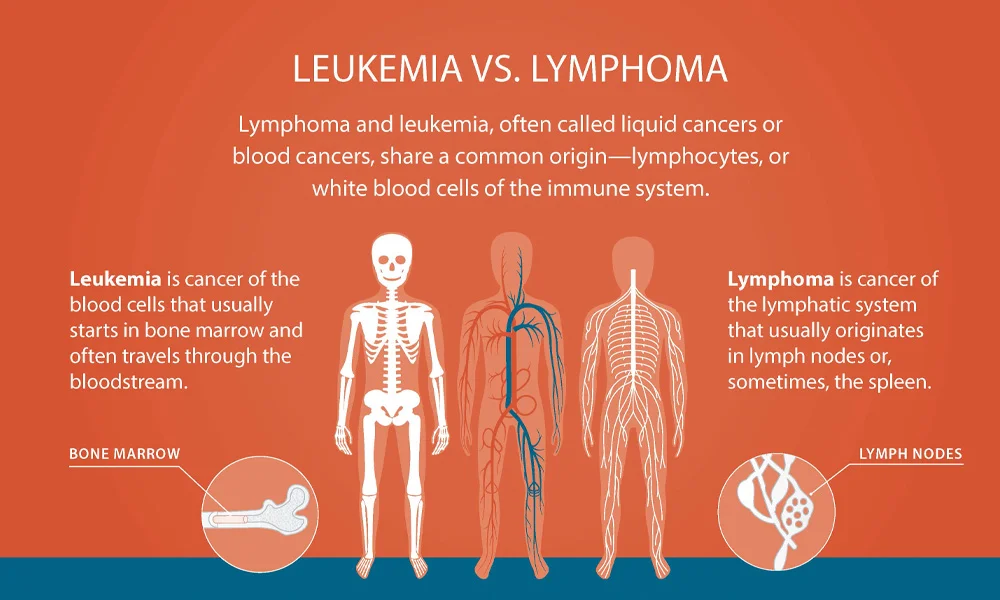
Leukaemia begins in blood-forming cells, usually in the bone marrow. It commonly affects white blood cells, although different forms may originate from different blood cell lines.
Leukaemia is often classified according to:
- Whether it is acute or chronic
- Whether it develops from myeloid or lymphoid cells
Acute forms generally progress quickly and require prompt treatment, while chronic forms may develop more slowly.
2. Lymphoma
Lymphoma begins in lymphocytes, a type of white blood cell involved in the immune system. It may develop in lymph nodes or other parts of the lymphatic system.
The two broad categories are:
- Hodgkin lymphoma
- Non-Hodgkin lymphoma
Lymphoma may cause enlarged lymph nodes, fever, night sweats, fatigue, or unexplained weight loss.
3. Multiple Myeloma
Multiple myeloma develops in plasma cells, which are specialised white blood cells that produce antibodies. Abnormal plasma cells can accumulate in the bone marrow and interfere with the production of healthy blood cells.
The disease may also affect bones, kidneys, and the immune system.
What Are Other Types of Cancer?
Many cancers outside the blood and lymphatic system are known as solid tumours. These cancers begin when abnormal cells form a mass or tumour within a particular organ or tissue.
Examples include:
- Breast cancer
- Lung cancer
- Colorectal cancer
- Prostate cancer
- Liver cancer
- Kidney cancer
- Pancreatic cancer
- Skin cancer
Solid tumours may remain localised in the organ where they began or spread to nearby tissues and distant organs. The spread of cancer from its original site to another part of the body is called metastasis.
However, not every solid cancer forms a clearly defined mass, and not every blood cancer behaves in the same way. The differences are based mainly on the tissue of origin and the biological behaviour of the cancer.
Blood Cancer vs Solid Tumours: Key Differences
| Feature | Blood Cancers | Other Cancers |
| Common origin | Bone marrow, blood-forming tissues, or lymphatic system | Specific organs or tissues |
| Tumour formation | May not form a single solid mass | Often forms a solid tumour |
| Main affected areas | Blood cells, bone marrow, lymph nodes, immune system | Organ or tissue where cancer begins |
| Spread | May circulate through blood or lymphatic systems | Often spreads through lymphatic or blood vessels |
| Diagnosis | Blood tests, bone marrow tests, biopsies, imaging, and specialised laboratory tests | Imaging, biopsies, blood tests, and other diagnostic procedures |
| Staging | Depends on the specific type of cancer | Often uses systems based on tumour size, lymph nodes, and metastasis |
| Treatment | May include chemotherapy, targeted therapy, immunotherapy, or transplant |
How Do Blood Cancers Differ from Other Cancers?
One of the most important differences is the way these cancers affect the body.
A solid tumour often begins in one location. For example, breast cancer starts in breast tissue, while lung cancer begins in lung tissue. Doctors may be able to identify the primary tumour using imaging scans and confirm it with a tissue biopsy.
Blood cancers may not begin as a single mass. Instead, abnormal cells may develop within the bone marrow, blood, lymph nodes, or other parts of the immune system. This can affect the production and function of healthy blood cells throughout the body.
This is why symptoms such as fatigue, frequent infections, easy bruising, anaemia, or abnormal blood counts may be important signs of a haematological malignancy.
Common Symptoms of Blood Cancer
Symptoms vary depending on the specific type and may develop gradually or quickly.
Common symptoms include:
- Persistent fatigue
- Fever or recurrent infections
- Unexplained weight loss
- Night sweats
- Easy bruising
- Excessive bleeding
- Pale skin
- Swollen lymph nodes
- Bone or joint pain
- Shortness of breath
- Frequent illness
- Abdominal fullness due to an enlarged spleen or liver
These symptoms can also occur with many non-cancerous conditions. Therefore, having one or more symptoms does not automatically mean that a person has cancer.
Symptoms of Other Cancers
Symptoms of solid tumours often depend on the organ affected.
Examples may include:
- A new lump or mass
- Persistent cough
- Changes in bowel habits
- Unexplained bleeding
- Changes in a mole or skin lesion
- Persistent abdominal pain
- Difficulty swallowing
- Changes in urination
- Unexplained weight loss
Some cancers may not cause noticeable symptoms in the early stages. Screening programmes can help detect certain cancers before symptoms develop.
How Is Blood Cancer Diagnosed?
The question of how is blood cancer diagnosed depends on the suspected type. Doctors generally begin with a medical history, physical examination, and laboratory tests.
Complete Blood Count
A complete blood count, or CBC, measures different types of blood cells. Abnormal levels of white blood cells, red blood cells, or platelets may indicate that further investigation is required.
Blood Smear
A blood smear allows specialists to examine the appearance and shape of blood cells under a microscope. It may help identify abnormal or immature cells.
Bone Marrow Examination
A bone marrow aspiration or biopsy may be required for conditions affecting blood-cell production. The sample can be examined to identify abnormal cells and determine the characteristics of the disease.
Flow Cytometry
Flow cytometry can help identify specific markers on abnormal cells. This is particularly useful in classifying certain leukaemias and lymphomas.
Genetic and Molecular Tests
Chromosome and molecular testing can identify genetic changes that help doctors classify the cancer and guide treatment decisions.
Imaging Tests and Biopsies
Imaging such as CT, PET, or MRI scans may be used depending on the suspected disease. For lymphoma, a lymph node biopsy may be necessary to confirm the diagnosis and identify the specific subtype.
What Are Blood Cancer Stages?
The term blood cancer stages can be confusing because there is no single staging system for all blood cancers.
Many solid tumours use systems based on the size of the primary tumour, lymph node involvement, and distant metastasis. However, blood cancers may use different classification systems depending on their type.
For example:
- Some leukaemias are classified according to disease type, genetic features, and risk factors.
- Lymphomas may be assigned stages based on the locations involved and whether the disease has spread.
- Multiple myeloma may be classified using specific staging systems based on disease characteristics and laboratory findings.
The stage or risk category helps doctors estimate disease extent, determine prognosis, and select appropriate treatment.
Blood Cancer Treatment Options
Blood Cancer Treatment depends on the type, subtype, genetic characteristics, disease extent, and the patient’s overall health.
Possible treatments include:
- Chemotherapy
- Immunotherapy
- Targeted therapy
- Radiation therapy
- Corticosteroids
- Blood transfusions
- Supportive medicines
- Stem cell transplantation
- CAR T-cell therapy in selected conditions
Some patients may receive a combination of treatments. For example, targeted medicines may be used alongside chemotherapy or immunotherapy depending on the diagnosis.
Treatment for solid tumours may also include surgery to remove the primary tumour. Surgery is less commonly the main treatment for widespread hematologic cancer because abnormal cells may be distributed throughout the blood-forming or lymphatic systems.
Can Blood Cancer Be Prevented?
There is no guaranteed way to prevent most blood cancers. Many develop because of complex genetic and biological changes that cannot always be predicted or avoided.
However, general health measures such as avoiding tobacco, limiting unnecessary exposure to known carcinogens, maintaining a healthy lifestyle, and following recommended medical screenings can support overall health.
Early medical evaluation is important when symptoms such as persistent fatigue, unexplained bruising, recurrent infections, or abnormal blood results continue without an obvious explanation.
When Should You See a Haematologist?
A haematologist specialises in disorders affecting the blood, bone marrow, and related systems.
You should consider seeking specialist evaluation if you experience:
- Persistent unexplained fatigue
- Repeated infections
- Unusual bleeding or bruising
- Persistent fever or night sweats
- Unexplained weight loss
- Enlarged lymph nodes
- Abnormal blood test results
- Persistent bone pain
Early assessment does not necessarily mean that cancer is present. However, appropriate testing can help identify the cause of concerning symptoms and support timely treatment when necessary.
Final Thoughts
Blood cancers differ from many other cancers because they usually begin in blood-forming tissues, bone marrow, or the lymphatic system rather than forming a tumour in a single organ. They include different conditions such as leukaemia, lymphoma, and multiple myeloma, each with its own characteristics, diagnostic methods, and treatment options.
Although blood cancers and solid tumours have important differences, both require accurate diagnosis and an individualised treatment plan. Advances in haematology and oncology have expanded the range of available therapies, helping many patients receive more targeted and effective care. In Pakistan, specialised centres such as the National Institute of Blood Disease & Bone Marrow Transplantation (NIBD) provide dedicated care for patients with complex blood disorders and haematological malignancies.
FAQs
What is the difference between blood cancer and other cancers?
Blood cancers usually begin in blood-forming tissues, bone marrow, or the lymphatic system, while many other cancers begin in specific organs and form solid tumours.
What are the main types of blood cancer?
The main types include leukaemia, lymphoma, and multiple myeloma. Each group contains several subtypes with different characteristics and treatment approaches.
Is blood cancer more serious than other cancers?
The seriousness of cancer depends on the specific type, subtype, disease characteristics, stage or risk category, and response to treatment. No single type of cancer is automatically more serious than all others.
How is blood cancer diagnosed?
Doctors may use blood tests, blood smears, bone marrow examinations, flow cytometry, genetic testing, imaging, and tissue biopsies depending on the suspected type.
Do all blood cancers have stages?
No. Different blood cancers use different classification and staging systems. Some are assessed using stages, while others are classified according to disease type, genetic characteristics, risk, and other factors.
Can blood cancer be treated?
Many blood cancers can be treated using therapies such as chemotherapy, immunotherapy, targeted therapy, radiation, stem cell transplantation, and other specialised treatments. The treatment plan depends on the individual diagnosis.


