

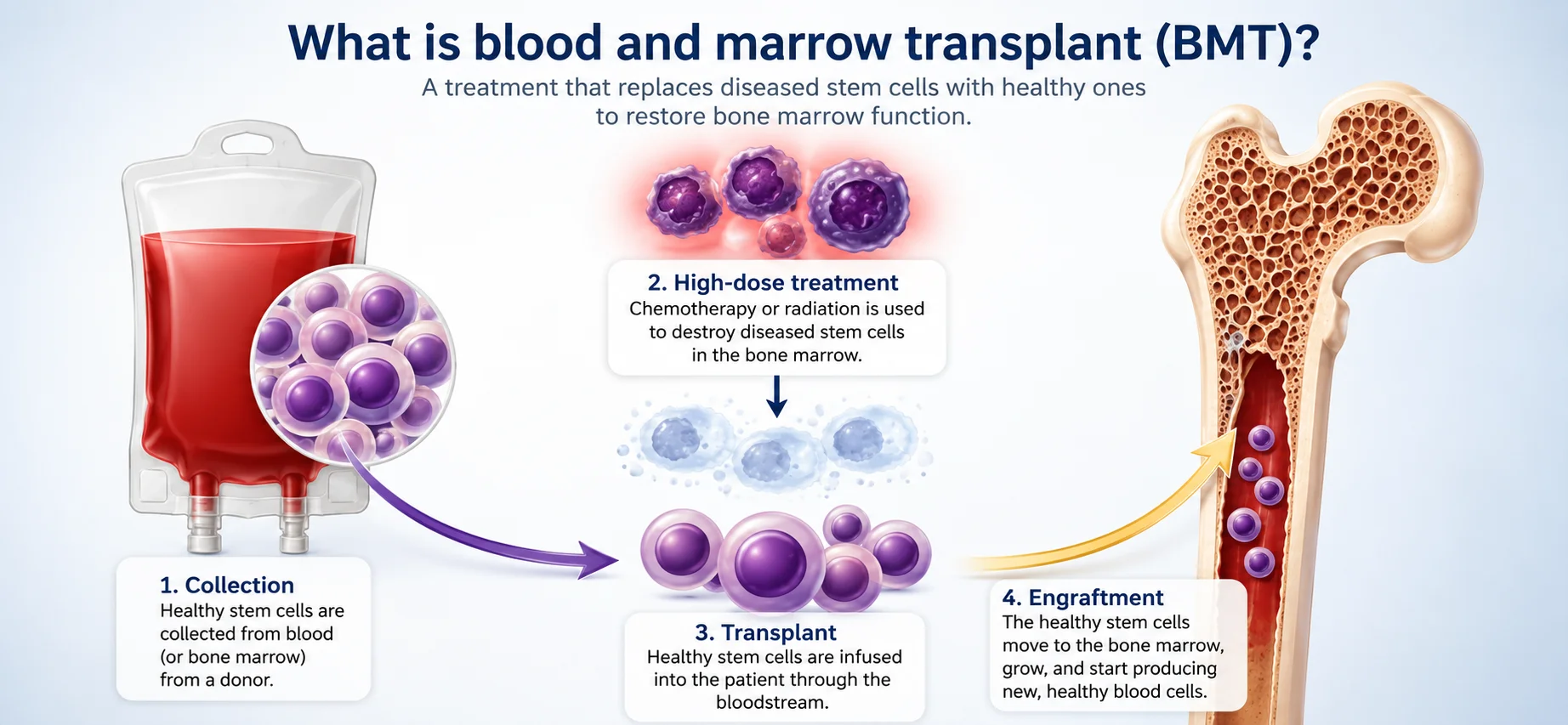
Blood disorders and certain cancers can significantly affect the body’s ability to produce healthy blood cells. In some cases, medications and supportive therapies may not be enough to restore normal bone marrow function. This is where a bone marrow transplant may become an important treatment option. By replacing damaged or diseased bone marrow with healthy stem cells, this procedure can help rebuild the body’s blood-forming system and improve long-term outcomes.
Understanding when a transplant is recommended can help patients and families make informed decisions about treatment and future care.
What Is a Bone Marrow Transplant?
A bone marrow transplant is a medical procedure used to replace unhealthy or damaged bone marrow with healthy blood-forming stem cells. Bone marrow is the soft tissue inside bones responsible for producing red blood cells, white blood cells, and platelets.
The procedure is often referred to as a stem cell transplant because the transplanted cells are stem cells capable of developing into healthy blood cells.
There are two primary types of transplants:
Autologous Transplant
In an autologous transplant, a patient’s own stem cells are collected, stored, and later returned after intensive treatment.
Allogeneic Transplant
In an allogeneic transplant, stem cells come from a compatible donor. This donor may be a sibling, family member, or unrelated donor with a closely matched tissue type.
The type of transplant recommended depends on the patient’s condition and overall health.
Why Is a Bone Marrow Transplant Performed?
Doctors may recommend a transplant when the bone marrow can no longer produce healthy blood cells or when diseased cells need to be replaced.
Common reasons include:
- Certain blood cancers
- Genetic blood disorders
- Bone marrow failure syndromes
- Immune system disorders
- Severe aplastic anemia
- Relapsed or treatment-resistant disease
The goal is to restore healthy blood cell production and improve the patient’s chances of long-term recovery.
Conditions That May Require a Bone Marrow Transplant
Several serious conditions can benefit from transplantation.
Leukaemia
One of the most common reasons for transplantation is leukemia. A leukemia bone marrow transplant may be recommended when the disease is aggressive, returns after treatment, or has a high risk of relapse.
Patients with acute myeloid leukemia (AML), acute lymphoblastic leukemia (ALL), and some chronic leukemias may be candidates for transplantation depending on disease stage and treatment response.
Lymphoma
Certain forms of Hodgkin and non-Hodgkin lymphoma may require transplantation if standard therapies fail or the cancer returns after remission.
Multiple Myeloma
Patients with multiple myeloma often undergo autologous transplantation as part of their treatment strategy after chemotherapy.
Aplastic Anaemia
Aplastic anemia occurs when the bone marrow fails to produce sufficient blood cells. In severe cases, transplantation may offer the best chance for a cure.
Thalassaemia
For some patients with severe inherited thalassemia, transplantation can provide a potential cure. A bone marrow transplant for thalassemia is often considered in younger patients who have a suitable donor and have not yet developed significant complications from the disease.
Sickle Cell Disease
Certain patients with severe sickle cell disease may benefit from transplantation, particularly when recurrent complications significantly affect quality of life.
Signs That a Transplant May Be Recommended
Not every patient with a blood-related condition requires transplantation. Doctors evaluate several factors before recommending the procedure.
A transplant may be considered when:
- Standard treatments are no longer effective
- Disease returns after initial treatment
- Bone marrow function is severely impaired
- The condition has a high risk of progression
- Long-term survival is unlikely without transplantation
- A suitable donor is available
The decision is highly individualized and involves careful assessment by a haematology and transplant team.
How Doctors Determine Eligibility
Before recommending transplantation, specialists perform a comprehensive evaluation.
Factors considered include:
Age and General Health
Patients must be healthy enough to tolerate the procedure and recovery process.
Disease Type and Stage
Certain diseases respond better to transplantation than others.
Response to Previous Treatment
Doctors assess whether the disease is controlled or actively progressing.
Organ Function
Heart, lung, liver, and kidney function are carefully evaluated.
Donor Availability
For allogeneic transplants, finding a compatible donor is essential.
A thorough assessment helps determine whether the benefits outweigh the potential risks.
The Transplant Process
Understanding the transplant journey can help reduce anxiety and prepare patients for treatment.
Pre-Transplant Evaluation
Patients undergo blood tests, imaging studies, and organ function assessments.
Conditioning Therapy
High-dose chemotherapy, with or without radiation therapy, is used to destroy diseased cells and prepare the bone marrow for new stem cells.
Stem Cell Infusion
Healthy stem cells are infused into the bloodstream through an intravenous line.
Engraftment
Over several weeks, the transplanted cells travel to the bone marrow and begin producing new blood cells.
Recovery and Monitoring
Patients require ongoing monitoring to manage complications and ensure successful recovery.
Risks and Potential Complications
Like any major medical procedure, transplantation carries risks.
Possible complications include:
- Infection
- Bleeding
- Organ damage
- Graft failure
- Graft-versus-host disease (GVHD)
- Delayed immune recovery
However, advances in transplant medicine have significantly improved patient outcomes and reduced complications over time.
Bone Marrow Treatment Alternatives
Not every patient requires transplantation. Depending on the diagnosis, several other forms of bone marrow treatment may be considered first.
These may include:
- Chemotherapy
- Targeted therapy
- Immunotherapy
- Blood transfusions
- Growth factor medications
- Gene therapy in selected cases
Doctors often recommend transplantation only when these treatments are unlikely to provide lasting disease control or cure.
What Influences Transplant Success?
Several factors contribute to positive outcomes following transplantation.
Important factors include:
- Early diagnosis and treatment
- Disease status at the time of transplant
- Donor compatibility
- Patient age
- Overall health
- Post-transplant care
The overall bone marrow transplant success rate varies depending on the condition being treated, donor match quality, and individual patient factors. Advances in donor matching, supportive care, and infection prevention have improved survival rates significantly over the past two decades.
Life After Transplant
Recovery does not end once the transplant is completed.
Patients may require:
- Regular follow-up visits
- Blood tests
- Infection monitoring
- Vaccination updates
- Nutritional support
- Physical rehabilitation
Many individuals gradually return to normal activities, although full immune system recovery can take months or even years.
Maintaining a healthy lifestyle and following medical recommendations are important for long-term success.
Can a Bone Marrow Transplant Cure Disease?
In some cases, transplantation offers the possibility of a cure.
Conditions where cure may be achievable include:
- Certain leukaemias
- Severe thalassaemia
- Aplastic anaemia
- Some inherited blood disorders
For other conditions, the procedure may not completely eliminate the disease but can significantly extend survival and improve quality of life.
Each patient’s prognosis depends on multiple factors, including disease characteristics and treatment response.
Final Thoughts
A bone marrow transplant is one of the most advanced treatments available for serious blood disorders, bone marrow failure syndromes, and certain cancers. While not every patient will require transplantation, it can be a life-saving option when conventional therapies are no longer effective. Understanding when a transplant is recommended, the conditions it treats, and the factors that influence outcomes can help patients make informed healthcare decisions.
In Pakistan, specialised transplant services, advanced diagnostics, and expert haematology care are available through leading institutions such as NIBD, helping patients access comprehensive treatment for complex blood and bone marrow disorders.
FAQs
What is a bone marrow transplant used for?
A bone marrow transplant is used to replace damaged or diseased bone marrow with healthy stem cells in patients with blood cancers, genetic blood disorders, and bone marrow failure conditions.
Who may need a bone marrow transplant?
Patients with leukemia, lymphoma, aplastic anemia, thalassemia, sickle cell disease, or multiple myeloma may be considered for transplantation depending on their condition and treatment response.
Is a stem cell transplant the same as a bone marrow transplant?
The terms are often used interchangeably. Modern transplants frequently use stem cells collected from blood rather than directly from bone marrow.
How long does recovery take after transplantation?
Initial recovery may take several months, while complete immune system recovery can take one to two years depending on the type of transplant and individual health factors.
Is a bone marrow transplant always successful?
Success rates vary based on the disease being treated, donor compatibility, patient age, and overall health. Advances in transplant medicine continue to improve outcomes.
Can thalassemia be cured with a transplant?
For some patients, particularly younger individuals with a compatible donor, a bone marrow transplant for thalassemia may offer a potential cure.


