

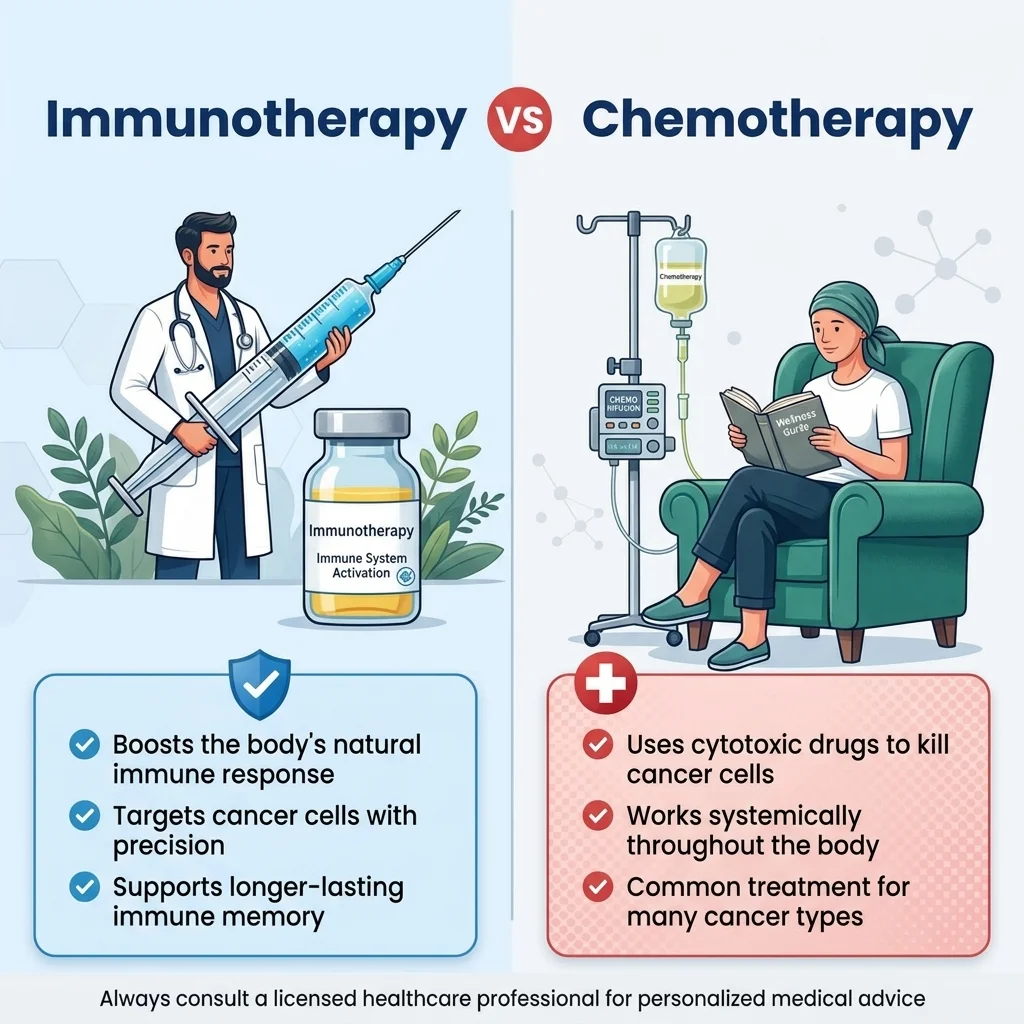
Cancer treatment has advanced significantly, giving patients more options for managing different types of cancer. Two widely recognised approaches are Chemotherapy and Immunotherapy. Although both are used to target cancer, they work in very different ways. Chemotherapy directly attacks rapidly dividing cancer cells, while immunotherapy helps the body’s immune system recognise and fight cancer more effectively.
Understanding the differences between these treatments can help patients and families better understand their options. In this guide, we’ll explain how chemotherapy and immunotherapy work, when they are used, their side effects, and how doctors decide which approach may be appropriate.
What Is Chemotherapy?
Chemotherapy is a cancer treatment that uses medicines to kill cancer cells or slow their growth. Because many cancer cells divide rapidly, chemotherapy drugs are designed to target cells that are actively growing and dividing.
Depending on the cancer, chemotherapy may be used:
- Before surgery to shrink a tumour
- After surgery to destroy remaining cancer cells
- Alongside other cancer treatments
- To control cancer that has spread
- To reduce symptoms caused by advanced cancer
The specific drugs, dosage, and treatment schedule depend on the type and stage of cancer, the patient’s overall health, and how the disease responds to treatment.
What Is Immunotherapy?
Immunotherapy is a type of biological treatment that helps the immune system recognise and attack cancer cells. Cancer cells can sometimes avoid immune detection or suppress immune responses. Immunotherapy works by helping restore or strengthen the body’s ability to respond to these abnormal cells.
Different forms include:
- Immune checkpoint inhibitors
- T-cell transfer therapy
- Monoclonal antibodies
- Treatment vaccines
- Immune system modulators
Checkpoint inhibitors, for example, block certain proteins that can prevent immune cells from attacking cancer. This allows T cells to respond more effectively against some tumours.
How Does Chemotherapy Work?
Chemotherapy medicines circulate through the body and target rapidly dividing cells. This makes them effective against many cancers but can also affect healthy cells that naturally divide quickly.
Healthy cells affected by chemotherapy may include cells in:
- Hair follicles
- The mouth
- The digestive system
- Bone marrow
As a result, patients may experience side effects such as fatigue, nausea, mouth sores, hair loss, and changes in blood cell counts. These effects vary depending on the medicine and individual patient.
How Does Immunotherapy Work?
Unlike traditional chemotherapy, immunotherapy does not primarily work by directly killing rapidly dividing cancer cells. Instead, it helps the immune system recognise, target, or attack cancer cells.
For example, immune checkpoint inhibitors can block signals that prevent T cells from attacking cancer. Other approaches, such as CAR T-cell therapy, involve modifying a patient’s immune cells in a laboratory so they can better recognise cancer cells.
This approach has expanded treatment options for several cancers, although it is not suitable for every patient.
What Types of Cancer Can Be Treated?
Both treatments can be used for multiple types of cancer, but their suitability depends on the individual diagnosis.
Cancers Commonly Treated With Chemotherapy
Chemotherapy may be used for:
- Leukaemia
- Lymphoma
- Breast cancer
- Lung cancer
- Colorectal cancer
- Ovarian cancer
- Testicular cancer
- Many other cancers
It may be used alone or alongside surgery, radiation, targeted therapy, or immunotherapy.
Cancers That May Respond to Immunotherapy
Modern cancer immunotherapy is used for selected patients with cancers such as:
- Lung cancer
- Melanoma
- Kidney cancer
- Bladder cancer
- Liver cancer
- Head and neck cancers
- Hodgkin lymphoma
- Certain colorectal cancers
Eligibility depends on cancer type, stage, molecular characteristics, previous treatments, and other individual factors.
Chemotherapy vs Immunotherapy: Key Differences
| Feature | Chemotherapy | Immunotherapy |
| Main approach | Directly kills or stops the growth of cancer cells | Helps the immune system attack cancer |
| Primary target | Rapidly dividing cells | Immune response and cancer-specific targets |
| Treatment response | Often acts relatively quickly | Response may develop differently between patients |
| Side effects | Can affect healthy rapidly dividing cells | May cause immune-related inflammation |
| Treatment schedule | Often given in cycles | Schedule varies by treatment |
| Combination therapy | Frequently combined with other treatments |
Neither treatment is universally better. The most appropriate option depends on the patient’s cancer and overall medical circumstances.
Side Effects of Chemotherapy
The effects of cancer chemotherapy vary from person to person.
Common side effects may include:
- Fatigue
- Nausea and vomiting
- Hair loss
- Mouth sores
- Reduced blood cell counts
- Increased risk of infection
- Appetite changes
Chemotherapy can affect healthy cells that divide rapidly, which contributes to many of these effects. Doctors can often provide medicines and supportive care to manage symptoms.
Side Effects of Immunotherapy
Immunotherapy can cause different side effects because it stimulates the immune system.
Possible effects include:
- Fatigue
- Fever
- Chills
- Skin rashes
- Diarrhoea
- Nausea
- Muscle or joint aches
- Inflammation of organs
In some cases, the immune system may attack healthy tissues, causing inflammation in organs such as the lungs, liver, intestines, thyroid, or other areas. Serious reactions are possible, so patients should report unusual symptoms to their healthcare team promptly.
How Doctors Choose Between the Treatments
Doctors do not choose treatment based solely on whether a therapy is newer or more advanced. Several factors are considered.
These may include:
- Type of cancer
- Cancer stage
- Genetic or molecular characteristics
- Overall health
- Previous treatments
- Treatment response
- Potential side effects
- Patient preferences
Some patients may receive a combination of therapies rather than choosing only one.
Can Chemotherapy and Immunotherapy Be Used Together?
Yes. In some cancers, chemotherapy and immunotherapy may be combined.
Chemotherapy can directly reduce the number of cancer cells, while immunotherapy works through the immune system. Combining treatments may therefore provide a broader approach to controlling certain cancers.
NIBD also notes that chemotherapy may be given alone or alongside immunotherapy, targeted therapy, radiotherapy, or bone marrow transplantation, depending on the patient’s condition.
Understanding Chemotherapy Treatment
A chemotherapy treatment plan is tailored to the individual. Some patients receive treatment through an intravenous infusion, while certain chemotherapy medicines can be taken orally.
Treatment may be organised into cycles consisting of treatment periods followed by rest periods. These breaks allow healthy tissues to recover before the next cycle.
Doctors monitor patients through physical examinations, blood tests, and imaging when appropriate to assess how well the cancer is responding.
What About Immunotherapy for Cancer?
The suitability of immunotherapy for cancer depends on whether the patient’s cancer is known to respond to a particular immunotherapy and whether the patient meets the necessary clinical criteria.
Doctors may consider tumour characteristics, biomarkers, disease stage, previous treatment, and overall health before recommending it.
Importantly, immunotherapy is not automatically appropriate for every cancer patient. A specialist should determine whether the potential benefits outweigh the risks.
Cost Considerations
The cost of cancer treatment varies significantly depending on the medicines used, treatment duration, hospital, diagnostic requirements, and supportive care.
Chemotherapy costs can differ according to the specific drugs and number of cycles required. Patients should discuss expected expenses with their healthcare provider and ask about available financial assistance where needed.
Similarly, immunotherapy costs vary considerably because different medicines and treatment schedules may be used.
Which Treatment Is Better?
There is no single answer to which approach is better. Chemotherapy remains an important treatment for many cancers, while immunotherapy has created additional options for patients whose cancers are responsive to immune-based treatments.
In some cases, doctors may recommend chemotherapy. In others, immunotherapy may be appropriate, while some patients may benefit from a combination of treatments.
The decision should always be based on the patient’s diagnosis, test results, treatment history, and medical assessment.
Final Thoughts
Chemotherapy and immunotherapy are different approaches to treating cancer, but both can play important roles in modern oncology. Chemotherapy directly targets rapidly dividing cancer cells, while immunotherapy helps the immune system recognise and fight cancer. Advances in cancer care have also made it possible to combine these approaches in selected cases.
Patients should discuss their diagnosis, treatment options, expected benefits, possible side effects, and monitoring requirements with their oncology team. In Pakistan, NIBD provides specialised haematology and oncology services and offers treatment approaches including chemotherapy and immunotherapy for appropriate conditions.
FAQs
What is the main difference between chemotherapy and immunotherapy?
Chemotherapy directly kills or slows the growth of cancer cells, particularly rapidly dividing cells. Immunotherapy works by helping the immune system recognise and attack cancer cells.
Is immunotherapy better than chemotherapy?
Neither treatment is universally better. The appropriate option depends on the cancer type, stage, biomarkers, previous treatments, overall health, and individual response.
Can chemotherapy and immunotherapy be given together?
Yes. Certain cancers may be treated with a combination of chemotherapy and immunotherapy when doctors believe the combination may provide a greater benefit.
Does immunotherapy have side effects?
Yes. Immunotherapy can cause fatigue, fever, skin reactions, digestive symptoms, and immune-related inflammation. Some reactions can be serious and require prompt medical attention.
Does chemotherapy always cause hair loss?
No. Hair loss depends on the specific chemotherapy medicine and dose. Some chemotherapy drugs cause significant hair loss, while others may cause little or none.
How do doctors know if treatment is working?
Doctors may use physical examinations, blood tests, scans, and other assessments to monitor how the cancer responds. Side effects alone do not indicate whether treatment is working.


