

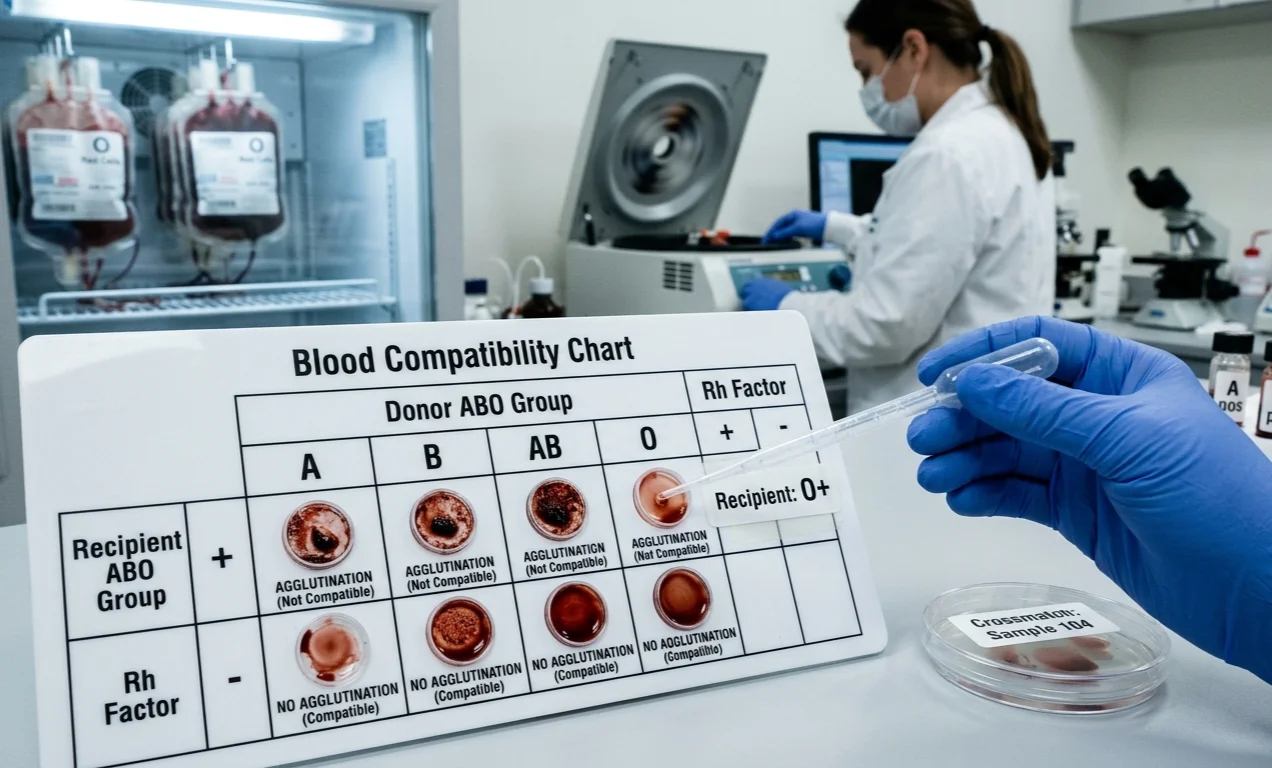
Understanding blood cross-matching is essential for safe medical care, especially when patients need a blood transfusion. Every year, millions of transfusions are performed in hospitals, but before any blood is given, strict testing is carried out to ensure the donor and recipient blood are fully compatible.
Even a small mismatch in blood types can lead to serious complications. That is why laboratories perform careful pre-transfusion testing, including blood grouping and cross-matching, before approving any transfusion.
In this guide, we will explain what is cross-matching, how blood compatibility works, why it matters for patient safety, and how hospitals ensure safe transfusion practices using modern testing methods.
What Is Blood Compatibility?
Blood compatibility refers to whether two people’s blood types can safely mix during a transfusion without causing a harmful reaction. This is one of the most important parts of blood transfusion safety, as incompatible blood can trigger the immune system to attack the donated blood cells.
ABO Blood Groups and Rh Factor Basics
Human blood is classified mainly into the ABO system:
- Blood group A
- Blood group B
- Blood group AB
- Blood group O
In addition, each blood group is either Rh-positive or Rh-negative.
This creates eight main blood types, such as A+, A-, B+, B-, AB+, AB-, O+, and O-.
The combination of ABO group and Rh factor determines whether blood is compatible between individuals.
Why Compatibility Matters in Transfusions
If incompatible blood is given during a transfusion, the recipient’s immune system may see the donor blood as a threat and attack it. This can lead to:
- Fever and chills
- Kidney damage
- Blood clotting problems
- Severe allergic reactions
- In rare cases, life-threatening complications
This is why hospitals never rely on assumptions and always perform strict laboratory testing before transfusion.
Risks of Incompatible Blood Transfusions
Incompatible transfusions can cause a serious immune response known as a hemolytic reaction. This happens when red blood cells are destroyed too quickly inside the body.
Because of these risks, blood transfusion safety protocols are extremely strict in every medical facility.
Safety Measures Used by Hospitals
Hospitals use multiple steps to ensure safe transfusion:
- Blood grouping tests
- Antibody screening
- Cross-matching tests
- Double verification of patient identity
- Sterile collection and storage systems
Each step reduces the risk of human error and ensures that only compatible blood is transfused.
Importance of Laboratory Testing
Laboratory testing is the foundation of safe transfusion practice. Even if a patient already knows their blood group, testing must still be repeated before every transfusion.
This is because the body can sometimes develop new antibodies due to infections, pregnancy, or previous transfusions.
Myths About Blood Compatibility
There are several misconceptions about blood compatibility:
- Myth: Knowing your blood group is enough for transfusion
- Fact: Cross-matching is always required before transfusion
- Myth: Family members always have compatible blood
- Fact: Even relatives can have incompatible blood types
- Myth: O⁺ blood can be given to anyone
- Fact: Only O⁻ is considered a universal red cell donor in emergencies
Professional testing always ensures accuracy and safety.
What Is Blood Cross-Matching?
Blood cross-matching is a laboratory test performed before a blood transfusion to check whether donor blood is compatible with the recipient’s blood.
It is one of the final and most important steps in pre-transfusion testing.
How Cross-Matching Works
In simple terms, cross-matching involves mixing a small sample of donor blood with recipient blood in a controlled laboratory setting.
Technicians then observe whether any reaction occurs, such as:
- Clumping of red blood cells
- Breakdown of cells
- Immune reactions
If no reaction occurs, the blood is considered compatible for transfusion.
Types of Cross-Matching
There are generally two main types:
1. Major Cross Match
This is the most important test and checks whether the recipient’s antibodies react against donor red blood cells.
2. Minor Cross Match
This checks donor plasma against recipient cells, although it is less commonly used in modern practice due to improved blood processing techniques.
Why Cross-Matching Is Essential
Cross-matching ensures:
- Safe blood transfusion
- Prevention of immune reactions
- Accurate donor-recipient matching
- Reduced risk of complications
It acts as a final safety check after blood grouping and antibody screening.
Blood Compatibility Chart Explained
A blood compatibility chart helps explain which blood types can safely donate to or receive from others.
Red Blood Cell Compatibility Overview
- O- → Universal donor (can give to all blood types)
- AB+ → Universal recipient (can receive from all blood types)
- A → Can receive from A and O
- B → Can receive from B and O
- AB → Can receive from all ABO types (if Rh compatible)
- O → Can donate to all ABO types (if Rh-compatible)
Rh Factor Importance
Rh-negative individuals should ideally receive Rh-negative blood to avoid immune reactions. Rh-positive individuals can receive both Rh-positive and Rh-negative blood in most cases.
This compatibility system is critical for safe transfusion practices in hospitals worldwide.
Universal Donor and Recipient
The concepts of universal donor and universal recipient are important in emergencies.
Universal Donor
- O-negative blood is known as the universal donor
- It can be given to almost all patients in emergencies
- It is especially useful when there is no time for full testing
Universal Recipient
- AB positive is known as the universal recipient
- People with AB+ blood can receive blood from all ABO types
However, even in emergencies, hospitals still perform cross-matching whenever possible to ensure maximum safety.
Pre-Transfusion Testing Explained
Pre-transfusion testing includes a series of laboratory procedures performed before any blood is given to a patient.
Key Steps in Pre-Transfusion Testing
- Blood grouping (ABO and Rh typing)
- Antibody screening
- Blood cross-matching
- Infection screening of donor blood
- Final verification of patient identity
Each step is designed to ensure complete safety and prevent transfusion reactions.
Why Pre-Transfusion Testing Matters
Pre-transfusion testing is essential because:
- It prevents life-threatening reactions
- It ensures correct donor matching
- It improves overall transfusion safety
- It builds trust in hospital blood services
Without these tests, blood transfusions would carry significant risks.
Common Misunderstandings About Blood Compatibility
Many people believe blood transfusions are simple, but in reality, they require detailed testing.
Some common misunderstandings include:
- Blood type alone is enough for matching
- All O blood is universally safe
- Compatibility never changes
In reality, antibody development and immune responses can change over time, which is why repeated testing is necessary.
Importance of Blood Transfusion Safety
Modern healthcare systems place strong emphasis on blood transfusion safety. Every transfusion is carefully monitored to ensure the patient receives only compatible and safe blood.
Hospitals follow strict protocols, including:
- Sterile equipment use
- Trained laboratory staff
- Advanced testing technologies
- Double-checking systems
These measures significantly reduce risks and ensure successful treatment outcomes.
Final Thoughts
Blood compatibility and blood cross-matching are essential components of safe medical treatment. Without proper testing, transfusions could lead to serious and potentially life-threatening complications. Understanding what cross-matching is, along with blood grouping and pre-transfusion testing, helps highlight the importance of laboratory science in saving lives.
In Pakistan, advanced diagnostic and transfusion services are supported by specialised centres such as the National Institute of Blood Disease & Bone Marrow Transplantation (NIBD), which plays a vital role in haematology research, safe transfusion practices, and patient care.
Raising awareness about blood compatibility encourages safer donation, better understanding of transfusion processes, and ultimately helps save more lives.
FAQs
What is blood cross-matching?
Blood cross-matching is a laboratory test performed before a blood transfusion to ensure the donor’s blood is compatible with the recipient’s blood. It helps prevent dangerous transfusion reactions by checking for immune incompatibility.
Why is blood compatibility important during transfusions?
Blood compatibility is essential because incompatible blood can trigger the immune system to attack donor red blood cells. This may lead to serious complications such as fever, kidney damage, clotting problems, or severe hemolytic reactions.
What is the difference between blood grouping and cross-matching?
Blood grouping identifies a person’s ABO blood type and Rh factor, while cross-matching tests whether the donor and recipient blood can safely mix together without causing a reaction.
Who is considered a universal blood donor?
People with O-negative blood are considered universal red blood cell donors because their blood can usually be given to patients of all blood types during emergencies.
Can family members always donate compatible blood?
No. Even close relatives may have incompatible blood types or antibodies. This is why hospitals always perform laboratory testing and cross-matching before any transfusion.
Is cross-matching required if the patient already knows their blood type?
Yes. Even if a patient knows their blood group, cross-matching and pre-transfusion testing are still necessary because new antibodies can develop over time due to pregnancy, infections, or previous transfusions.


