

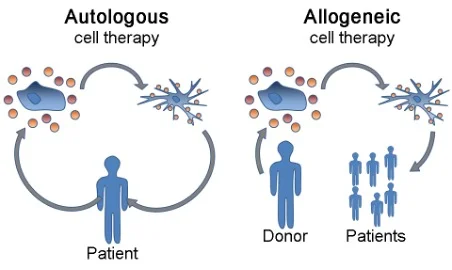
A Stem Cell Transplant is an advanced treatment that replaces damaged or diseased blood-forming stem cells with healthy cells. These cells may come from the patient or a suitable donor, depending on the disease, treatment plan, and overall health of the individual.
Two major types of transplantation are autologous and allogeneic transplantation. Although both aim to restore healthy blood-cell production, they differ significantly in the source of stem cells, the preparation process, potential risks, and the conditions they are commonly used to treat.
Understanding the difference between these two approaches can help patients and families better understand the treatment journey. In this guide, we’ll explain what autologous and allogeneic transplants are, how they work, their advantages and risks, and what patients should know about treatment in Pakistan.
What Is a Bone Marrow Transplant?
A bone marrow transplant is a procedure that replaces unhealthy or damaged blood-forming stem cells with healthy stem cells. These cells help the body produce red blood cells, white blood cells, and platelets.
Stem cells used for transplantation may be collected from:
- The patient’s own blood or bone marrow
- A related donor
- An unrelated donor
- An identical twin
- Umbilical cord blood in certain cases
The transplant process usually involves several stages, including medical assessment, stem cell collection, conditioning treatment, infusion of the stem cells, and close monitoring during recovery.
What Is an Autologous Transplant?
An autologous transplant uses the patient’s own stem cells. These cells are collected and stored before the patient receives high-dose chemotherapy or other intensive treatment.
After the conditioning treatment, the previously collected stem cells are returned to the patient through an infusion. The cells then travel to the bone marrow and begin producing new blood cells.
How Does an Autologous Transplant Work?
The process generally includes:
- Stem cell mobilisation: Medication is used to encourage stem cells to move from the bone marrow into the bloodstream.
- Stem cell collection: The cells are collected from the blood using a process called apheresis.
- Conditioning treatment: High-dose chemotherapy, and sometimes radiation, is used to treat the disease.
- Stem cell infusion: The patient’s stored stem cells are returned to the body.
- Engraftment: The stem cells begin producing new blood cells.
Because the cells come from the patient, there is no risk of the transplanted cells attacking the patient’s tissues through graft-versus-host disease. Engraftment may also occur more quickly compared with donor transplantation.
Conditions Treated with Autologous Transplantation
Autologous transplantation may be used for certain cancers and blood disorders, including:
- Multiple myeloma
- Hodgkin lymphoma
- Non-Hodgkin lymphoma
- Selected solid tumours
- Some relapsed or treatment-resistant diseases
The exact treatment plan depends on the diagnosis and the patient’s response to previous therapies. It is described as autologous transplantation which is an option for conditions including multiple myeloma and certain lymphomas.
What Is an Allogeneic Transplant?
An allogeneic transplant uses blood-forming stem cells from another person. The donor may be a sibling, another relative, or an unrelated individual whose tissue type is sufficiently compatible with the patient.
The goal is to replace diseased or damaged bone marrow with healthy donor stem cells. The donor’s immune system may also provide an additional anti-cancer effect by recognising and attacking abnormal cancer cells. This is commonly known as the graft-versus-tumour effect.
How Does an Allogeneic Transplant Work?
The general process includes:
- Donor matching: Doctors assess human leukocyte antigen (HLA) compatibility between the patient and potential donors.
- Donor stem cell collection: Stem cells may be collected from peripheral blood or bone marrow.
- Conditioning treatment: Chemotherapy, with or without radiation, prepares the body for transplantation.
- Stem cell infusion: Donor cells are infused into the patient.
- Engraftment and monitoring: Doctors monitor the patient while the donor cells establish healthy blood-cell production.
Finding a suitable Bone Marrow Donor is an important part of the process. A matched sibling may be an option, but other related or unrelated donors may also be considered depending on the patient’s HLA typing and available transplant approaches.
Conditions Treated with Allogeneic Transplantation
Allogeneic transplantation may be used for several serious blood cancers and non-malignant disorders, including:
- Acute myeloid leukaemia
- Acute lymphoblastic leukaemia
- Chronic myeloid leukaemia
- Myelodysplastic syndromes
- Severe aplastic anaemia
- Thalassaemia
- Sickle cell disease
- Inherited bone marrow failure syndromes
- Certain inherited metabolic disorders
In Pakistan, specialist transplant centres offer allogeneic transplantation for a range of blood cancers, bone marrow failure syndromes, haemoglobin disorders, and inherited conditions.
Autologous vs Allogeneic Transplant: Key Differences
| Feature | Autologous Transplant | Allogeneic Transplant |
| Stem cell source | Patient’s own cells | Cells from a donor |
| Donor required | No | Yes |
| GVHD risk | No | Yes |
| Immune anti-cancer effect | No donor graft-versus-tumour effect | May provide a graft-versus-tumour effect |
| Common uses | Multiple myeloma and some lymphomas | Leukaemia, marrow failure, and inherited disorders |
| Matching required | No donor matching | HLA matching is important |
| Relapse considerations | Disease cells may potentially be collected with the graft | Donor immune cells may help target remaining cancer cells |
Neither type is universally better than the other. The most appropriate option depends on the disease, treatment history, age, general health, availability of a suitable donor, and the expected benefits and risks of transplantation.
What Is the Bone Marrow Transplant Procedure Like?
The Bone Marrow Transplant Procedure involves more than the stem cell infusion itself. Before transplantation, patients undergo detailed evaluations that may include blood tests, imaging, organ-function assessments, disease monitoring, and donor compatibility testing.
Patients then receive a conditioning regimen. This treatment helps destroy diseased cells and prepares the body for the new stem cells.
After the infusion, the patient is closely monitored for:
- Low blood-cell counts
- Infections
- Bleeding
- Fever
- Nausea and fatigue
- Delayed engraftment
- Organ complications
Allogeneic transplant recipients also require monitoring for graft-versus-host disease, in which donor immune cells attack healthy tissues. GVHD can affect areas such as the skin, liver, digestive system, mouth, eyes, lungs, and other organs.
Risks of Autologous Transplantation
Although autologous transplantation avoids donor-related complications, it is still an intensive treatment.
Potential risks include:
- Infection
- Low blood-cell counts
- Fatigue
- Nausea and vomiting
- Mouth sores
- Organ complications
- Infertility
- Disease relapse
One consideration is that the collected stem cell product may contain cancer cells in some circumstances. Additionally, an autologous transplant does not provide the donor immune-system effect associated with allogeneic transplantation.
Risks of Allogeneic Transplantation
Allogeneic transplantation may offer important benefits for certain diseases, but it can involve additional risks.
These may include:
- Graft-versus-host disease
- Graft failure
- Serious infections
- Delayed immune recovery
- Organ complications
- Infertility
- Relapse
- Treatment-related complications
The risk of GVHD can be influenced by factors such as donor compatibility and the specific transplant approach. Doctors use different medicines and strategies to reduce and manage this risk.
Bone Marrow Transplant in Pakistan
Access to specialist transplant care has expanded in Pakistan, with dedicated centres providing transplant evaluation, stem cell collection, conditioning, transplantation, supportive care, and long-term follow-up.
When considering Bone Marrow Transplant in Pakistan, patients should evaluate the transplant centre’s experience, the availability of specialised haematology and oncology teams, laboratory and blood-bank support, infection management, donor testing, and post-transplant monitoring.
The treatment may be offered for both adult and paediatric patients, depending on the centre and clinical requirements.
What Is the Bone Marrow Transplant Cost?
The Bone Marrow Transplant Cost can vary significantly. There is no single price that applies to every patient because the total expense depends on several factors, including:
- Type of transplant
- Underlying disease
- Conditioning regimen
- Donor testing and matching
- Hospitalisation duration
- Medications
- Blood and platelet transfusions
- Infection treatment
- Management of complications
- Follow-up care
An autologous transplant and an allogeneic transplant may have different costs because allogeneic treatment involves donor evaluation, matching, and potentially longer-term immunosuppressive treatment.
Patients should request a detailed treatment and financial estimate from their transplant centre before beginning therapy.
How Do Doctors Decide Between Autologous and Allogeneic Transplantation?
Doctors consider several factors before recommending a transplant type.
These may include:
- The patient’s diagnosis
- Disease stage and risk level
- Previous treatments
- Response to chemotherapy
- Age and overall health
- Organ function
- Availability of a suitable donor
- Risk of relapse
- Potential transplant complications
For some cancers, an autologous approach may be preferred because the patient’s own stem cells can support recovery after intensive treatment. For other diseases, replacing diseased marrow with donor cells and benefiting from donor immune activity may be more appropriate.
The decision should always be made by a qualified haematology and transplant team after a complete medical evaluation.
Final Thoughts
Autologous and allogeneic transplantation are two important approaches used to treat serious blood cancers, bone marrow disorders, and inherited conditions. Both are types of stem cell transplant procedures, but the key difference is the source of the stem cells: autologous transplantation uses the patient’s own cells, while allogeneic transplantation uses cells from a suitable donor.
Patients considering transplantation in Pakistan should seek care from an experienced specialist team that can provide comprehensive evaluation, transplant treatment, and long-term follow-up. Centres such as the National Institute of Blood Disease & Bone Marrow Transplantation (NIBD) provide specialised services for patients requiring different types of transplant care.
FAQs
What is the main difference between autologous and allogeneic transplantation?
Autologous transplantation uses the patient’s own stem cells, while allogeneic transplantation uses stem cells from a donor. Allogeneic transplantation may provide a donor immune effect against cancer but carries a risk of graft-versus-host disease.
Is an autologous transplant safer than an allogeneic transplant?
Autologous transplantation avoids donor-related complications such as GVHD. However, both procedures involve intensive treatment and can have serious risks. The safer and more suitable option depends on the patient’s diagnosis and overall health.
Does an allogeneic transplant always require a family donor?
No. A donor may be a sibling, another relative, or an unrelated person with suitable compatibility. In some cases, alternative donor approaches may also be considered.
What diseases can be treated with an allogeneic transplant?
Allogeneic transplantation may be used for conditions such as leukaemia, myelodysplastic syndromes, severe aplastic anaemia, thalassaemia, sickle cell disease, and certain inherited bone marrow disorders.
How much does a bone marrow transplant cost in Pakistan?
The cost varies depending on the transplant type, disease, treatment regimen, donor requirements, hospital stay, medications, and complications. Patients should obtain an individualised estimate from their transplant centre.
How long does recovery take after transplantation?
Recovery varies from person to person. Blood-cell recovery may occur over the weeks following transplantation, while immune recovery and long-term follow-up can take considerably longer, particularly after allogeneic transplantation.


